When Mark moved into his three-quarter-acre suburban lot, he found patchy grass near the driveway and soggy soil under the maple tree—he didn’t know whether to water daily or wait a week. Across town, Maria’s tiny front lawn browned every July despite daily sprinkling from a cheap timer. Both problems come down to timing and method, not more hose time. This guide matches common lawn challenges to the right watering setup, so you can learn how often to water your lawn for best results without wasting water or killing the turf.
How to assess your lawn so you know what schedule it needs
Problem: You don’t know if your lawn needs light daily watering or deep weekly soaking. Wrong schedules cause shallow roots, disease, and waste. Start with three checks: soil moisture, grass type, and sun exposure.
Step 1 — Check soil moisture
Use a screwdriver or soil probe. In moist soil the tool slips in easily; in dry soil you’ll struggle. A rule of thumb: water when the top 2–3 inches of soil are dry for cool-season grasses, and 3–4 inches for warm-season types. For a concrete figure, lawns typically need about 1 to 1.25 inches of water per week during the growing season (source: many state extension services).
Step 2 — Identify grass type and roots
Cool-season grasses (fescue, bluegrass) thrive with two to three waterings per week during peak growth; warm-season grasses (Bermuda, zoysia) prefer deep weekly soakings in summer. Pull up a small patch—if roots are less than 3 inches deep, you’re likely overwatering or watering too shallowly.
Step 3 — Map sun and soil
Split your lawn into zones: full sun, partial shade, slope, and compacted areas. A south-facing, compacted area may need slightly more frequent soakings. Mark each zone for different run times or separate irrigation circuits.
Example: Mark’s maple-shaded patch showed damp soil to 1 inch but roots only 2 inches deep—he switched that zone to less frequent, deeper watering and saw roots lengthen within a month.
Match the watering solution to the problem (setup recommendations)
Problem → Solution is the fastest way to fix recurring issues. Use the following pairings to match yard situations with equipment and schedules.
- Small lawn or irregular shape: DIY mobile sprinklers on a short, frequent schedule.
- Large lawn or multiple zones: smart in-ground systems that run customized cycles.
- Vegetable gardens: drip irrigation that delivers steady, precise volumes.
- Flower beds: soaker hoses or drip lines for root-zone wetting without overhead spray.
- Potted plants: self-watering systems or slow-release wicks for steady moisture.
How much and how often per zone
For typical U.S. lawns during active growth, aim for about 1 inch per week total, applied in 1–2 sessions for cool-season lawns or 1 session for warm-season lawns. For example, a 5,000 sq ft lawn getting 0.5 inches per irrigation twice weekly will reach 1 inch total. That’s better than daily 10-minute sprayings which only wet the top inch.
Zone typeSuggested weekly volumeSuggested scheduleFull sun, warm-season1–1.25 inchesOnce weekly, deep soak (Example: 60–90 minutes with rotors)Cool-season lawn1–1.25 inchesTwo sessions per week, 30–50 minutes each depending on sprinkler outputShaded lawn0.5–0.75 inchesOne to two short sessions weekly; avoid overwatering
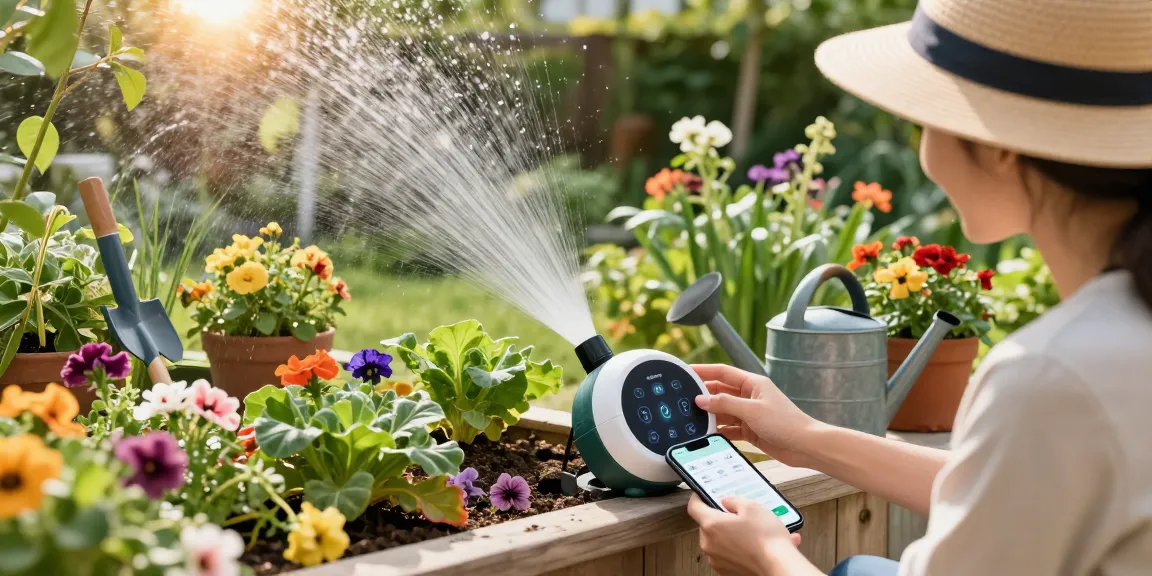
Practical tip: a WiFi timer such as the RainPoint model lets you set different schedules per zone and adjust based on recent rainfall, which keeps deep weekly soakings consistent for large lawns.
Build an efficient schedule: step-by-step watering calendar
Problem: You water out of habit, not need. A clear calendar prevents over- or under-watering. Below is a simple process to craft a personalized calendar and examples showing how often to water your lawn for best results.
- Determine your grass type and root depth (see previous section).
- Measure irrigation output: place cans or jars to measure inches per hour for each sprinkler head.
- Calculate runtime: If heads deliver 0.5 inches/hour and you need 1 inch/week, schedule two 1-hour sessions or one 2-hour session depending on your grass type.
- Set days with at least one day gap between sessions (e.g., Mon/Thu or Sunday for once-weekly).
- Adjust seasonally — increase slightly during heat waves, cut back during cool, rainy weeks.
Example: Maria’s small lawn had spray heads delivering 0.25 inches per 20 minutes. She wanted 1 inch/week for her cool-season turf. By running sprinklers 40 minutes twice a week (Tues/Sat), she stopped daily watering and saw more uniform green growth in three weeks.
For homeowners who want automatic weather adjustments, RainPoint smart controllers integrate local forecasts and moisture data so your calendar adapts without constant tinkering.
Fix common problems with targeted changes
Problem: You’re seeing brown patches, puddles, or fungus. Match the symptom to the fix below.
Brown, thin grass in patches
Cause: Likely underwatering—roots are shallow or soil dries between waterings. Solution: Increase soak depth. For cool-season lawns, change from daily light sprays to two deeper sessions per week that apply the required weekly inch total.
Soggy or mossy areas
Cause: Overwatering or poor drainage. Solution: Reduce frequency and increase time between cycles to let the soil dry. Consider aerating compacted soil to improve drainage. If using a timer, reduce that zone’s run time by 25–50% and check results for two weeks.
Inefficient coverage and runoff
Cause: Sprinklers set too long on slopes or compacted areas. Solution: Use cycle-and-soak: shorter run times with multiple repeats allow water to soak in without running off. See detailed cycle-and-soak guidance at learn how often to water your lawn for best results to match repetition and soak intervals to your soil type.
Example: On a 10% slope, Joe switched from a single 45-minute run to three 15-minute cycles spaced 30 minutes apart. Runoff stopped and the turf recovered in six weeks.
Tools, monitoring, and proven savings
Problem: You want to save water and money but don’t know what tools to use. The right combination of timer, soil sensor, and irrigation layout pays off.
Use these tools:
- Soil moisture sensors for root-zone feedback.
- Rain sensors or automatic shutoff to avoid watering after storms.
- Smart timers that adjust schedules based on weather.
Data point: According to the EPA, smart irrigation controllers can save up to 30% of outdoor water use in some landscapes, and WaterSense-certified controllers are cited for significant household water savings (EPA WaterSense). A practical homeowner saved roughly 10,000–12,000 gallons a year by switching from a fixed schedule to a weather-adjusting smart timer.
Example: Samantha added a soil moisture probe to her controller and cut watering time by 35% during spring and fall. Her turf stayed healthy and her summer bill dropped noticeably.
If you want hands-off reliability, pair a soil sensor and a WiFi timer with a well-designed irrigation layout. A WiFi timer from RainPoint can handle complex schedules across multiple zones so you don’t need to babysit seasonal changes.